

Most of us own a pair of joggers that has never seen a treadmill, and a hoodie that gets worn to work far more often than to a workout. That overlap has a name, and it has quietly rewritten how people get dressed. Shoppers keep asking what athleisure is, and the honest answer has less to do with sport than with how you want your day to feel. It is the difference between changing clothes three times before dinner and simply carrying on. This guide covers where the style came from, what separates it from lounging around the house in old kit, and how to build a wardrobe of athleisure clothing that earns its keep. Start with the definition below.
Athleisure is apparel designed with performance fabric and gym-level comfort, but cut and styled for ordinary daily life.
It works when the fit is deliberate, the fabric holds its shape after washing, and no more than half the outfit reads as sportswear.
What Is Athleisure, and Where Did the Idea Actually Start?
The concept is older than the buzz around it. Tracksuits went mainstream in the seventies. Yoga pants left the studio in the early 2000s and never went back. By the time people started working from kitchen tables, the last barrier collapsed. Nobody wanted to sit in stiff trousers for nine hours, and nobody wanted to look like they had rolled out of bed on a video call either.
What settled between those two extremes is athleisure clothing: pieces built with stretch, breathability and movement in mind, but shaped like normal garments. A jogger with a tapered leg and a clean hem. A hoodie in heavyweight cotton that sits square on the shoulders instead of drooping. A tee cut long enough to stay put when you reach for something. The technical side is there. It just does not announce itself.
The distinction matters. Gym kit is designed to be sweated in and then removed. This is designed to stay on.
The Half and Half Rule That Keeps It Looking Intentional
Here is the simplest filter we know. Look at your outfit and count how many pieces obviously belong in a gym. If the answer is more than half, you are dressed for training, not for the day.
One athletic anchor plus two ordinary pieces almost always lands. Joggers with a plain crew neck tee and a structured jacket. A zip through hoodie with dark denim and clean leather trainers. The moment you stack three sport pieces together, mesh panels, running shorts and a performance top, the look stops being style and becomes workout gear that wandered outside.
Colour does a lot of quiet work here too. Neon and heavy branding push everything back toward the treadmill. Charcoal, olive, sand, navy and black read as clothing first. Keep the loud pieces for actual training and let the muted ones carry your week.
Can You Wear This to the Office Without Looking Underdressed?
In most workplaces now, yes, with one condition. Something in the outfit has to be structured.
An overshirt, a bomber, a knit polo or a well-made jacket does that job. It gives the eye a defined shoulder line and a finished edge, which is what actually separates smart from sloppy. Underneath, comfort can do whatever it likes. Nobody is inspecting the waistband.
Footwear is the other half of the answer. Worn-out running shoes undo everything above them. Clean minimal trainers or suede low tops keep the whole thing on the right side of the line.
Men's Athleisure Outfits for Four Real Days
Formulas beat inspiration boards, because a formula still works on a Tuesday morning when you are late.
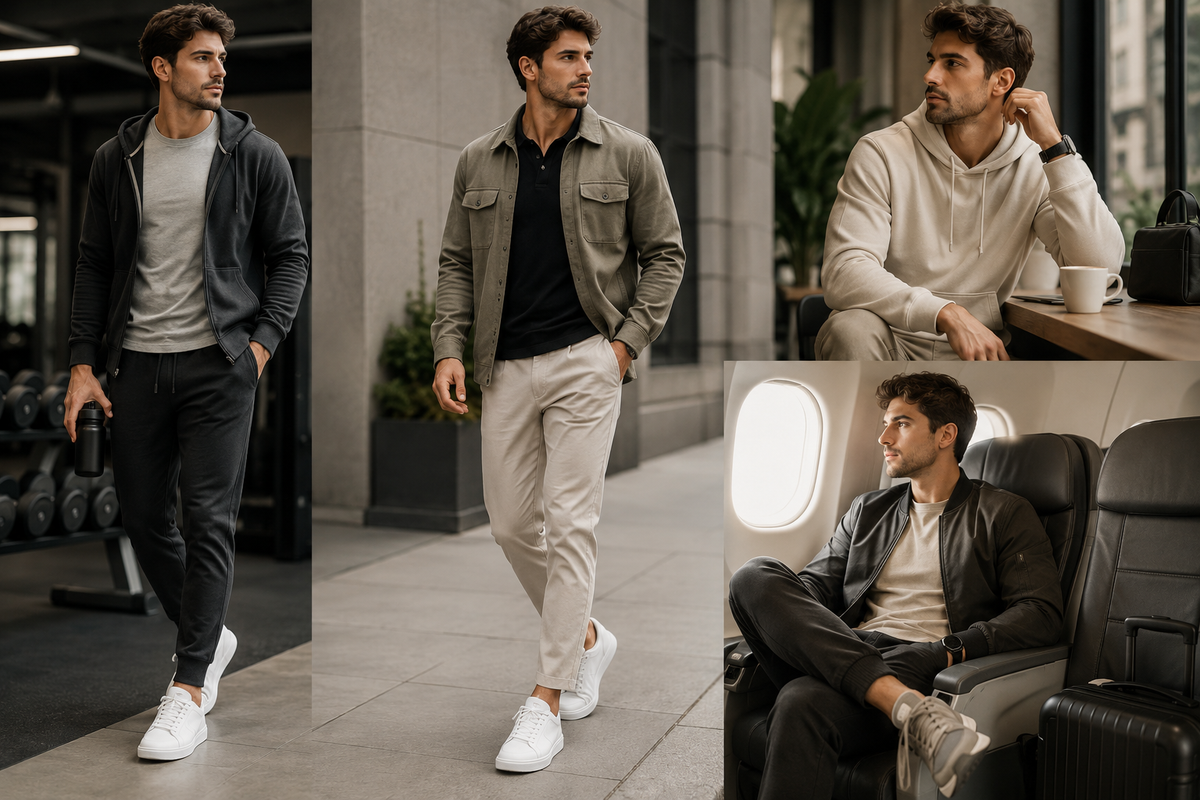
For errands and coffee, joggers with a plain tee and a zip hoodie are the whole answer, as long as everything sits in one colour family and the trainers are clean. For a casual office, swap the joggers for chino-style stretch trousers, pull on a knit polo and finish with an overshirt, keeping logos off the outer layer. For travel, stretch trousers with a long-sleeve tee and a bomber give you layers you can strip off on a plane without unpacking anything. For an evening out, go entirely dark: black joggers, a heavyweight tee and a leather jacket, with one texture doing the contrast work.
The pattern running through all four is the same. Soft with structured. Relaxed with fitted. That tension is why good men's athleisure outfits look considered while three matching sweat pieces look like laundry day.
Start with two colours you already wear constantly and buy pieces that work with both. Ten items that combine freely will serve you better than thirty that only pair with one another.
Fabric and Fit Decide Everything Else
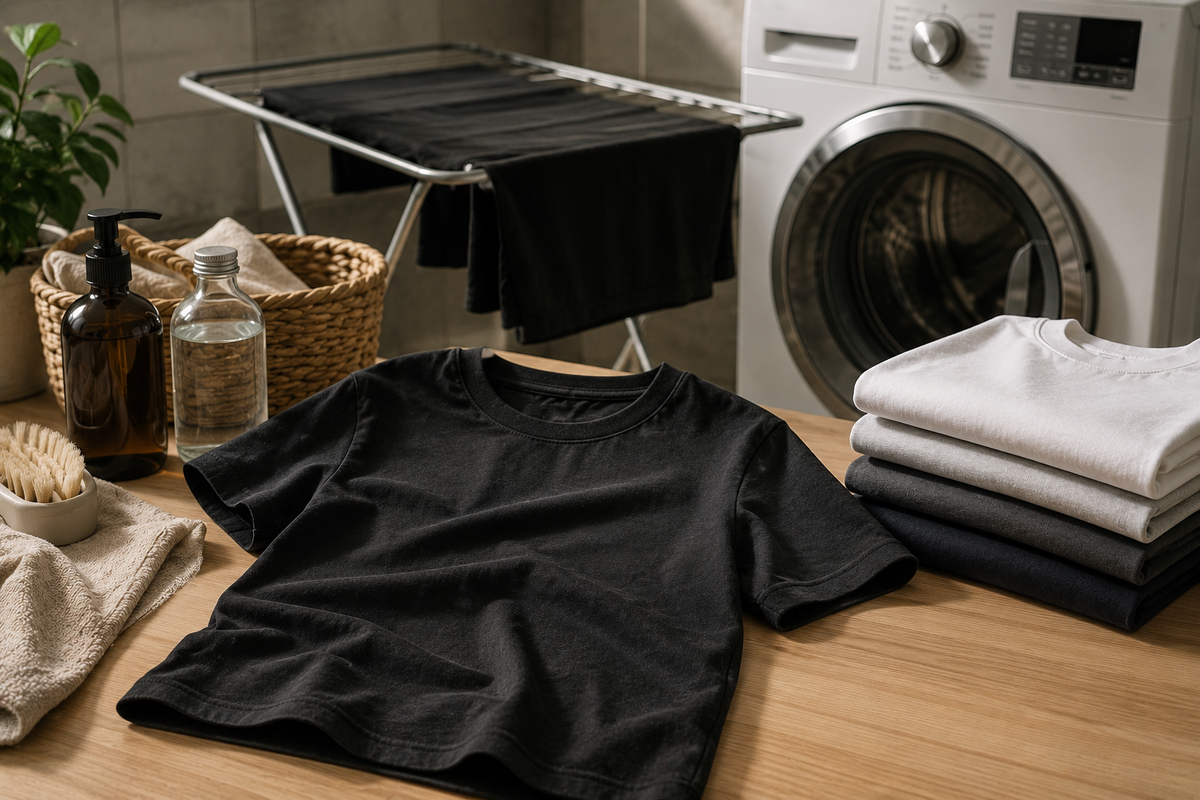
Weight is the first thing to check. Thin jersey pills, twists at the seam, and loses its shape by the third wash. Heavier cotton and cotton blends with a little elastane hold their line and drape properly, which is what makes casual pieces look expensive rather than tired.
Fit is the second. This style fails when it is either painted on or shapeless. You want room to move with a defined edge somewhere: a taper at the ankle, a hem that sits at the hip bone, a sleeve that ends where it should.
Third, look at the finishing. Flat seams, ribbed cuffs that spring back, and drawcords that do not fray. Those details are the difference between a piece you keep for years and one you quietly stop reaching for.
Mistakes That Show Up Again and Again
-
Wearing head-to-toe matching sets outside the gym, which reads as a uniform rather than an outfit
-
Choosing pieces by softness alone and ignoring how they hold shape after washing
-
Letting scuffed training shoes carry an otherwise sharp look
-
Sizing up everywhere for comfort instead of picking one relaxed piece and keeping the rest true to size
-
Buying loud prints that only pair with a single item in your wardrobe
Key Takeaways
-
Athleisure clothing means performance comfort in everyday cuts, not gym kit worn in public
-
Keep sport pieces to half the outfit or fewer, and add one structured layer
-
Muted colours and minimal branding stretch a piece across far more occasions
-
Fabric weight and finishing decide how long the look survives
-
The best outfits come from repeatable formulas, not from buying more
Comfort should not cost you the way you look. Browse our men's athleisure outfits at N'Trench Apparel and build a rotation that carries you from morning to evening without a single change of clothes.
FAQs
What is athleisure in plain terms?
It is clothing made with activewear fabric and comfort, but designed in everyday shapes so it suits normal life. Think joggers, hoodies and stretch trousers styled as regular clothing rather than training kit.
Is athleisure suitable for men over 40?
Absolutely. Choose darker colours, a tailored taper and zero visible branding. Structured outerwear over relaxed lower halves reads as confident and modern at any age.
How do I stop it looking like loungewear?
Add one structured item and clean footwear. A jacket, overshirt or knit polo gives the outfit a defined shoulder line, which is what separates dressed from undressed.
What fabrics last longest in this category?
Heavyweight cotton, cotton blends with a small percentage of elastane, and brushed fleece. They resist pilling, keep their shape through repeated washing and drape better than thin jersey.
Can it work in hot weather?
Yes. Switch to breathable cotton tees, lighter joggers or shorts and drop the outer layer. Keep the tailored fit so the outfit still looks put together in the heat.

Leave a comment
This site is protected by hCaptcha and the hCaptcha Privacy Policy and Terms of Service apply.