

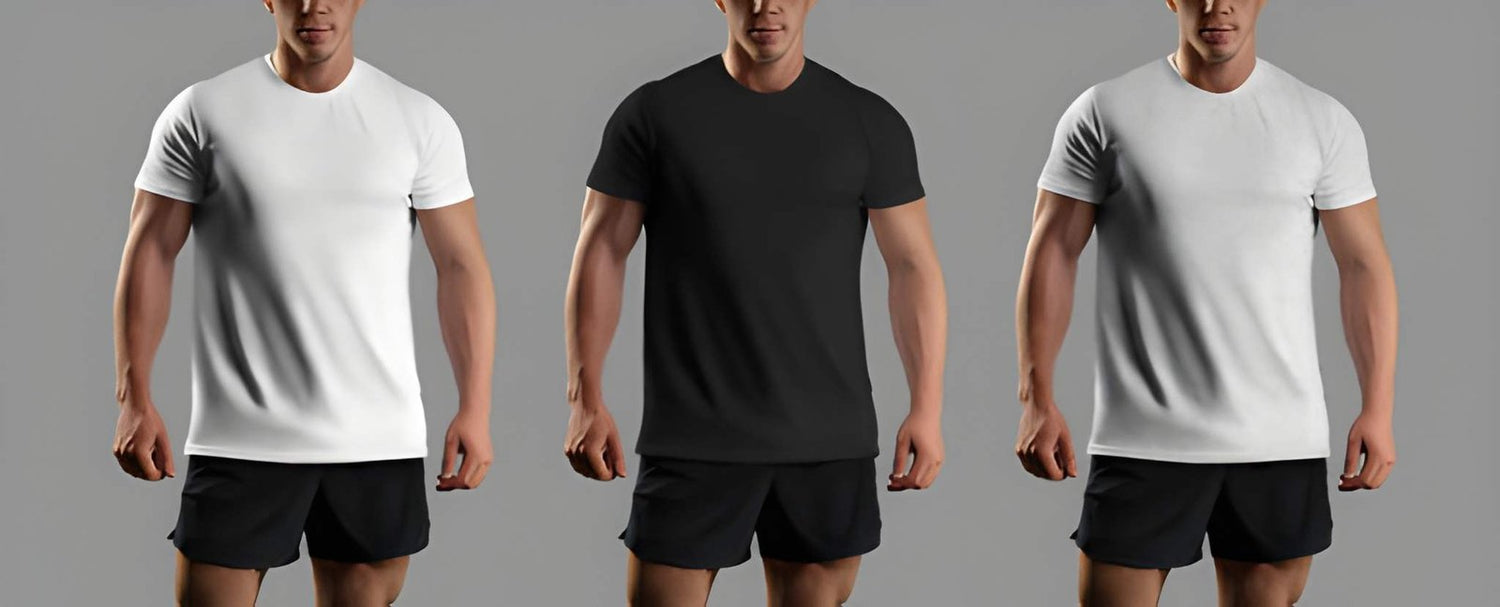
You have owned both kinds without knowing the difference had a name.
There is the tee that arrives soft, feels great for a month, then starts twisting sideways at the hem, going see-through across the back, and hanging off your shoulders like it gave up. And there is the one you bought three years ago that still looks like a shirt.
The gap between them is mostly weight, and partly a few construction details nobody puts on the front of the packaging. Here is what actually separates the two.
The Short Answer
A heavyweight t-shirt is one made from fabric weighing roughly 200 GSM or more, compared with 130 to 150 GSM for a standard tee. The thicker knit holds its shape, hangs with structure instead of clinging, stays opaque, and survives far more washes before it starts to sag.
What Weight Actually Means
Fabric weight is measured in grams per square meter, shortened to GSM, or in ounces per square yard in the US. It describes how much material is packed into the knit, which is the single biggest factor in how a tee feels and how long it lasts.
|
Category |
Weight |
What it feels like |
|
Lightweight |
130 to 150 GSM |
Thin, drapes close, often slightly sheer |
|
Midweight |
160 to 180 GSM |
The standard high street tee |
|
Heavyweight |
200 to 240 GSM |
Structured, opaque, holds its shape |
|
Ultra heavyweight |
250 GSM and up |
Boxy, substantial, closer to a light sweatshirt |
Most mass-produced tees sit at the lower end because thin fabric is cheaper to make and cheaper to ship. That is the whole reason the category exists as it does.
Weight Is Not the Only Thing
A thick tee made badly is still a bad tee. Three other details separate a premium heavyweight tee from a merely heavy one.
Ring-spun, combed cotton. Ring-spinning twists and thins the fibers as they are spun, producing a smoother, stronger yarn. Combing then strips out the short fibers that cause pilling and roughness. Together, they explain why one 200 GSM tee feels soft, and another feels like canvas.
Side seams instead of a tube. Cheap tees are knitted as a tube with no seams down the sides. It saves money, and it is why they twist after a few washes. A side-seamed tee is cut and sewn to follow the body and stays straight.
Shoulder taping and a proper collar. A strip of fabric reinforcing the shoulder seam stops the shirt from stretching out across the back. A ribbed collar with a little elastane snaps back instead of turning into the wavy neckline that ruins otherwise fine shirts.
Check for these three, and you can judge a tee before you ever put it on.
Why Heavyweight Is Better
It keeps its shape. The structure comes from the fabric itself, so the shirt hangs the same on day one and day three hundred.
It is genuinely opaque. No showing what you are wearing underneath, no thin patches across the shoulders in bright light.
It hides rather than highlights. Thin cotton clings to whatever is under it. Heavier fabric falls away from the body, which flatters a much wider range of builds.
It layers properly. Under a hoodie or an open jacket, a heavyweight tee holds its own line instead of bunching up at the armholes.
It ages instead of dying. Good cotton softens with washing while keeping structure. Cheap cotton just thins out and goes limp.
It costs less over time. One tee worn for three years beats four replaced annually, even before you count how much better it looked in the meantime.
The Honest Trade-Offs
It is not the right shirt for every situation, and it is worth saying so.
Heavyweight cotton is warmer, so in peak summer heat, a lighter tee is more comfortable. It also takes longer to dry, packs more bulkily for travel, and costs more up front because there is more material and better cotton in it.
If you want one shirt for a July afternoon in direct sun, go lighter. For everything else, weight wins.
What Garment Dyeing Adds
Most tees are made from fabric that was dyed before it was cut. Garment dyeing flips that: the shirt is constructed first, then dyed as a finished piece.
The result is color with depth rather than a flat surface tone, a softer hand feel straight out of the bag, and fading that happens evenly and gradually instead of patchily. Garment dyed pieces also do most of their shrinking during the dye process, so what you receive is closer to what you keep.
It is the reason a garment dyed heavyweight tee looks broken in on the first wear and better on the fiftieth.
How to Spot One Before You Buy
-
Look for a stated GSM or ounce weight on the listing. Brands that use good fabric say so
-
Hold it up to light if you can. Real weight means you cannot see through it
-
Run a finger down the side. A seam means it was cut and sewn properly
-
Check the collar. Flat and floppy is a bad sign, ribbed with some spring is a good one
-
Feel the shoulder seam for a taped strip
Making It Last
Wash cold and inside out. Heat is what shrinks cotton and wrecks printed graphics, so tumble dry low or hang dry when you can. Skip the fabric softener, which coats the fibers and flattens the texture over time. Fold rather than hang if the shirt is heavy, since hangers stretch the shoulders on the thickest tees.
Done properly, a good heavyweight tee outlasts several rounds of cheaper ones.
Our Heavyweight Range
Our premium heavyweight tees start at $25.00, and the garment dyed heavyweight tees run from $44.95 in colors like red, butter and washed blue that develop character as you wear them.
They are cut to sit away from the body without going boxy, and they are the piece most of our customers reorder in a second color once the first one proves itself. Shipping within the USA is free, and the newsletter takes ten percent off a first order.
Key Takeaways
-
Heavyweight means roughly 200 GSM or more, against 130 to 150 for a standard tee
-
Ring-spun combed cotton, side seams and shoulder taping matter as much as weight
-
Heavier fabric stays opaque, keeps its shape and flatters more body types
-
The trade-off is warmth, drying time and a higher up front price
-
Garment dyeing adds color depth and pre-shrinks the finished shirt
Frequently Asked Questions
What GSM counts as a heavyweight t-shirt?
Around 200 GSM and above. Standard tees sit between 130 and 150 GSM, while ultra heavyweight styles reach 250 GSM or more.
Are heavyweight t-shirts too hot for summer?
They are warmer than thin tees. For peak summer heat a lighter fabric is more comfortable, but heavyweight works across the rest of the year.
Do heavyweight t-shirts shrink?
Some shrinkage is normal with cotton. Garment dyed tees shrink mostly during production, and cold washing with low heat drying prevents most of the rest.
Why do heavyweight tees cost more?
More cotton per shirt, better yarn, and construction details like side seams and shoulder taping all add cost that thin mass produced tees avoid.
How long should a heavyweight t-shirt last?
With cold washing and low heat drying, several years of regular wear. Thin tees typically lose their shape within a single year.


Leave a comment
This site is protected by hCaptcha and the hCaptcha Privacy Policy and Terms of Service apply.