

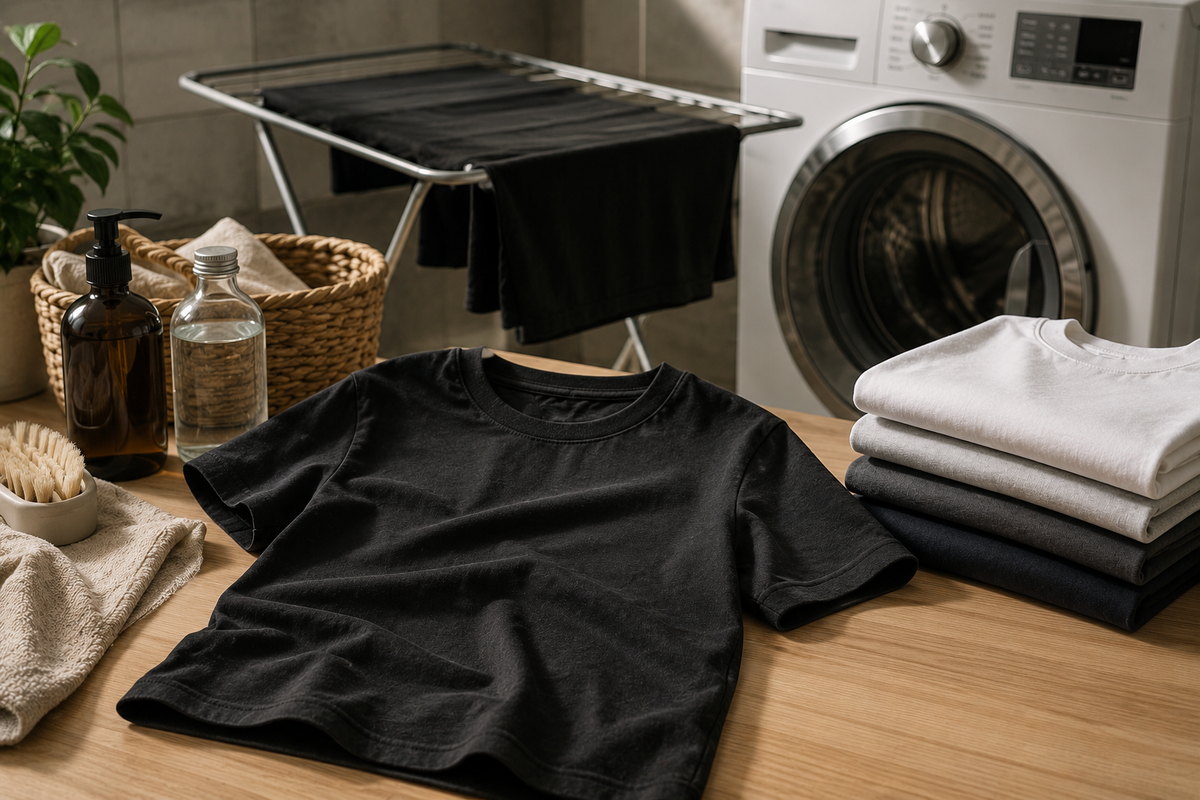
A heavyweight tee is the one shirt in the drawer you actually notice when it goes wrong. The collar sags, the hem curls, the black fades to a tired grey, and the piece you reached for every week suddenly stays folded. None of that is bad luck. Almost all of it comes from the wash. People ask us how to wash heavyweight T-shirts because thick cotton behaves differently from thin jersey, and the habits that work for cheap tees quietly destroy good ones. This guide covers the routine we recommend for every tee in our heavyweight t shirt care range, from the first wash to long-term storage. Follow the steps below.
Wash heavyweight cotton tees inside out in cold water on a gentle cycle, then air dry flat or on a hanger.
Heat is the main enemy. Hot water and tumble dryers cause most shrinking, fading, and collar damage in thick cotton.
Why Thick Cotton Needs a Different Routine
Heavyweight fabric usually sits between 200 and 260 gsm, sometimes higher. That density is why the shirt drapes properly, holds its shape, and does not go transparent under strong light. It also means the fabric holds far more water and takes far longer to dry.
Two things follow from that. First, a soaked heavyweight tee is heavy enough to stretch under its own weight, which is how shoulders widen and hems drop. Second, the extra time spent in a hot dryer gives the cotton fibres more chance to contract, which is where sudden shrinkage comes from.
The question of how to wash cotton tees really comes down to managing water temperature, friction and weight. Get those three right and the shirt outlives everything else in the drawer.
The First Wash Sets the Tone
Wash a new heavyweight tee before wearing it, on its own or with similar colours. Dye runoff is common in deep blacks, olives and burgundy, and the first cycle carries most of it away.
Use cold water, turn the shirt inside out, and skip the fabric softener. Softener coats cotton fibres with a residue that reduces breathability and dulls colour over time. If the shirt feels stiff at first, that is the finishing on the fabric, and two or three washes will soften it naturally.
How to Wash Heavyweight T-Shirts Step by Step
Turn the tee inside out. This protects the outer surface from rubbing against the drum and other garments, which is what causes pilling and surface fuzz.
Set the machine to cold, ideally 30 degrees or lower, on a gentle or delicate cycle. Warm water opens cotton fibres and lets colour escape. Cold keeps the dye locked in.
Use a mild liquid detergent and use less than you think. Powder detergents can leave deposits in dense fabric, and excess detergent needs more rinsing than a short cycle provides.
Do not overload the drum. Cotton needs room to move, and a packed machine forces garments to twist against each other. Half to two-thirds full is the sweet spot.
Skip bleach entirely, including the oxygen-based versions on coloured tees. For stains, dab a little detergent directly on the mark, leave it fifteen minutes, then wash as normal.
Can You Put a Heavyweight Tee in the Dryer?
You can, but it will cost you. Tumble drying is the single fastest way to shrink thick cotton and warp a ribbed collar.
If you have no choice, use the lowest heat setting and pull the shirt out while it is still slightly damp, then let it finish in the air. That avoids the last stage of drying, where most of the shrinkage happens.
Air drying is better in every way. Lay the shirt flat on a rack if you can, since hanging a wet heavyweight tee lets gravity pull the shoulders and hem out of shape. If you do hang it, use a wide shoulder hanger rather than a thin wire one, and never hang it by the collar.
Storage, Ironing and the Small Habits That Add Up
Fold heavyweight tees rather than hanging them long term. Thick cotton is heavy enough that months on a hanger will stretch the neckline permanently.
Iron on medium heat, inside out, and avoid pressing directly over any print. A steam pass on the hanger usually removes creases without touching the fabric at all.
Rotate your tees. Wearing the same shirt twice a week gives the fibres no recovery time and wears one piece out while the rest sit untouched. If you find yourself reaching for the same one constantly, that is a sign to add another in a similar colour rather than washing that one to death. The same rules apply across our how to wash cotton tees guidance for women's pieces, since the fabric behaves identically.
Finally, wash less often than habit suggests. A tee worn for a few hours indoors does not need a full cycle. Airing it out overnight is often enough, and every wash you skip is wear you save.
Mistakes That Ruin Good Tees
-
Washing on hot because the load looks dirty, when cold plus a longer cycle does the same job
-
Using fabric softener, which coats the fibres and flattens colour
-
Hanging soaking wet tees by the collar to dry
-
Tumble drying on high heat and then wondering why the fit changed
-
Ironing directly over prints or graphics instead of pressing inside out
Key Takeaways
-
Cold water, inside out, gentle cycle, mild detergent. That covers most heavyweight T-shirt care
-
Air drying flat protects the shoulders, hem, and collar better than any dryer setting
-
Skip softener and bleach completely on thick cotton
-
Fold for storage instead of hanging long term
-
Learning how to wash heavyweight T-shirts properly takes one extra minute and adds years of wear
Look after them well, and a good tee will outlast three cheap ones. Browse the N'Trench heavyweight range and start with a shirt worth the care.
FAQs
How to wash cotton tees without shrinking them?
Use cold water on a gentle cycle and air dry instead of tumble drying. Heat causes cotton fibres to contract, so removing heat from both stages prevents almost all shrinkage.
How often should I wash a heavyweight tee?
After two or three wears in normal conditions, or after one wear in heat or heavy activity. Overwashing wears fibres down faster than actual use does.
Does heavyweight T-shirt care differ from regular tees?
Yes. Thick cotton holds more water, dries slower and stretches under its own weight, so flat air drying and gentle cycles matter far more than they do for thin jersey.
Can I wash heavyweight T-shirts with jeans?
Better not to. Denim rivets, zips and rough fabric cause friction that leads to pilling. Wash tees with soft items in similar colours instead.
Why did my black tee fade so quickly?
Usually hot water, strong detergent or direct sunlight while drying. Wash cold, turn inside out and dry in shade to keep dark colours deep for far longer.


Leave a comment
This site is protected by hCaptcha and the hCaptcha Privacy Policy and Terms of Service apply.